
A proper winter warmer gratin
Sausage, potato, leek, celeriac, CHEESE AND CREAM. And some advice on burning.

Good afternoon, everyone. The recipe method content below is for my paid subscribers, but there is plenty of pressure cooker how to/troubleshooting before you get that far for the rest of you.
I hope if you are in the vicinity of the horrible storm which is raging around the UK, you are weathering it well and are safe and warm. Definitely a time for hunkering down if you can. I started out on a walk this morning and lasted about 10 minutes before turning round again. I don’t mind cold, but I don’t much like stinging rain in my face and it was virtually horizontal. I came home instead to finish this and then decant a big pot of chicken stock I’ve made with the remains of last week’s capon.
I have had this gratin in my head for ages. I am always wanting to do more root vegetable recipes - not least because like the person who asked me for more ideas, I know a fair few of you will be getting lots of them in your vegetable boxes. And they are good seasonal things to be eating.
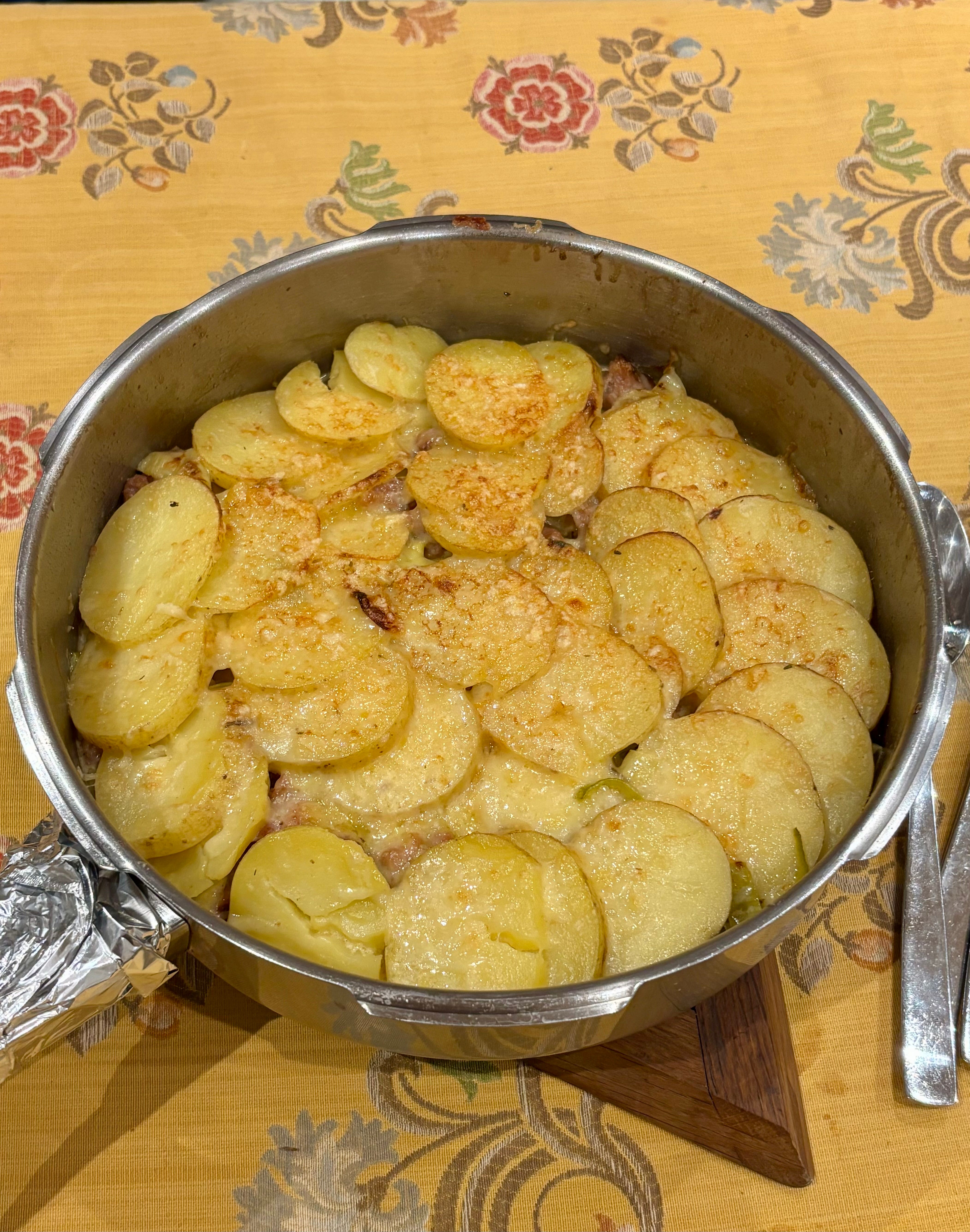
So there will be more recipes before winter is out. This particular recipe came about because firstly, after eating this mussel dish, Adam (my 15 year old son, for those of you who are new), for the first time decided he liked celeriac. I also I had a huge tray of chipolatas - 36 of them - which needed using up fast. I turned half of them into sausage balls for adding to pasta etc. The rest I roasted, thinking they would be good for a few days in sandwiches etc. (Of course, the next morning they were gone. Shariq and Adam snacking on the lot during a marathon Warhammer session.) I really liked the idea of a sausage and celeriac gratin. Last night was the night.
It did mean I had to make a separate vegetarian dish for Lilly too, but I had some flatbread dough to use up, and a massive amount of vegetables, neglected because they weren’t needed during all the recipe testing I’ve been doing. So I made a quick vegetable and lentil curry, using large mild green chilli peppers, red onions, a yellow cauliflower and the remans of a large jar of brown lentils used during testing. Zero minutes! Of course, it meant that the rest of us ended up having both. I don’t think I would advise the paring but they weren’t completely wrong together! Sometimes meals in our house are like a pic n mix multi cuisine buffet.
Before I get onto the recipe, I want to address an issue that cropped up when I posted a photo of the gratin on Instagram yesterday. I had several messages along the lines of “how didn’t it burn?” Or “my gratins always burn!”
How to Avoid Burning Gratins
The reason people think a gratin will always burn is because the liquid is mainly creamy and because it usually contains potatoes. Potatoes are starchy and if starch has time to pull away from the potato and sink to the base before the cooker comes up to pressure, then it will create a layer which is susceptible to burning. There is no risk of this happening in this particular recipe for two main reasons -
there is plenty of liquid - melting butter immediately creates steam, so do leeks as soon as they come into contact with heat. And the quantity of diluted cream is plenty to stop this happening. As the pressure cooker is already hot when the liquid is added, it will immediately start heating up and create steam, which speeds up the process of the cooker coming up to pressure when you put the lid on.
the potatoes are in a single layer at the top of the gratin and I have been careful about how everything else is layered too. There is enough matter between them and the base of the cooker (leek, sausage, celeriac, liquid) to stop the starch from reaching the base base before the cooker reaches high pressure. Once it is at pressure, it isn’t an issue.
If you wanted to do an all potato gratin - dauphinoise, say - I still find that butter + liquid + the short time it takes to come up to pressure means that it doesn’t burn. But the other thing you can do, apart from cook the gratin Pot in Pot, as described below, is put a layer of something - eg., baking parchment, Bake-O-Glide, on the base of the cooker. It makes a considerable difference.
If you find that you are regularly burning things which are starchy/creamy (rice pudding is another one which should work perfectly but I know has caused problems for some of you), it will mainly be because the pressure cooker isn’t coming up to pressure fast enough. That will be an issue with either your heat source or your pressure cooker.
If you do have any issues, please let me know, I shall do my best to troubleshoot. But if you follow my instructions exactly, and everything is working as it should be, it should be fine.
Induction hobs and burn potential
And talking of bring pressure cookers up to pressure as fast as possible, a few of you have mentioned that using the highest heat on an induction regularly leads to burning. If this is happening to you, lower the setting slightly. If the heat is so fierce that it burns very quickly, before pressure is reached, that is too hot. So reduce gradually until you find your pressure cooker/induction hob sweet spot.
What to do if your pressure cooker is badly burned?
I have also felt sad to read in my messages today that someone burned their pressure cookers beyond redemption. I am not quite sure how this happens - I have burned mine many times in the course of experimentation - thick, black, hard layers of burnt, melded onto the base starch. But it has never not been removable. Short soak and scrape off the top layer. Longer soak in hot water or on a gentle simmer with detergent. Then Barkeeper’s Friend with wire wool or something more gently abrasive. This has never yet failed me and will even get off all those tiny black specks which often remain. The cookers are never any the worse for it. If anyone has any better removal techniques, please shout out in the comments!
Now, for the recipe:
A Gratin of Sausage, Potato, Leek and Celeriac
I make gratins in one of my shallow pressure cookers because it will fit under the grill. If you are using one that is too tall for your grill, or you just don’t care so much about browned cheese, you can add cheese and just let it melt, not brown, leaving the cooker on a low heat and loosely covered - I often do this myself.
I would not recommend decanting the cooked gratin into an ovenproof dish - it will all just break up and ruin the carefully constructed layers of the gratin. Instead, for the whole cook you could use the Pot in Pot method - find an oven proof dish that will fit into your pressure cooker, assemble the gratin as described below, place it on a trivet and cook for longer - 6 minutes should do it. Still a bit of a faff and you might have to reduce the quantity of ingredients to fit in your pot. But it does you give you control and is a good method for those of you who don’t trust me re the burning!
The absolute best thing to do if you want some browning and can’t fit your pressure cooker under your grill is to invest in a chef’s blow torch. You can melt and brown cheese very evenly if done from a distance.
A note on the sausage - normally I say fry in the pressure cooker, but in this case I fry separately, just because you need the base of your pressure cooker completely clean and you would have to thoroughly deglaze. So fry the sausage in a frying pan before you start.
1 tbsp olive oil
200g sausage meat, removed from casings and shaped into small balls/patties
15g butter
1 large/two small leeks, finely sliced
1 small celeriac, peeled, halved and sliced
Leaves from a sprig of thyme
A few pinches of chilli flakes (optional, it is very nice and mellow without)
350g floury potatoes, sliced (I don’t bother to peel)
50ml white wine
1 tsp Dijon mustard
150ml double cream
50ml stock or water
100g cheese - I used gruyere in this instance
